Commercial Real Estate Agent CA Secrets Revealed: What Experts Don't Want You to Know

Commercial real estate can feel like a private language spoken in unfamiliar terms: cap rates, triple-net leases, absorption, tenant improvements, debt service coverage, and renewal options. If you are buying a building or searching for space for your business, it is understandable to feel overwhelmed.
You may also wonder whether experienced investors know something you do not.
The encouraging truth is that commercial real estate is not magic. The strongest decisions usually come from asking better questions, slowing down enough to examine the details, and understanding how local conditions affect your specific property.
In 2026, Southern California is not one single market. Ontario and the Inland Empire behave differently from Los Angeles, Orange County, and San Diego. Retail, office, industrial, medical, flex, and mixed-use properties each tell a different story.
Here are the overlooked realities that can help you move forward with greater clarity.
Secret #1: "Southern California" is too broad to guide a decision
A market report may discuss Los Angeles, San Bernardino, Riverside, Orange, and San Diego counties as one region. That can be useful for identifying broad trends, but it is not enough to price or evaluate a specific property.
Imagine using a weather forecast for the entire state to decide whether you need an umbrella in Ontario. The information may be generally relevant, but your actual block could be sunny.
The same is true in commercial real estate.
Within a primary 25-mile radius of Ontario International Airport, logistics access, freeway connections, building functionality, labor availability, and proximity to population centers can all affect demand. A warehouse in Ontario may compete differently from a property in Riverside, Rancho Cucamonga, Fontana, or San Bernardino.
Los Angeles and Orange County typically have tighter industrial conditions and higher asking rents. The Inland Empire has experienced more available space and rent adjustments, giving some buyers and tenants additional negotiating leverage. San Diego has its own mix of office, life sciences, retail, industrial, and coastal submarkets.
The lesson: Do not accept a regional average as a substitute for property-specific analysis.
Secret #2: Asking rent is not the same as effective rent
Commercial listings often advertise a rental rate that looks straightforward. But the actual economics may include:
Free-rent periods
Tenant improvement allowances
Moving or construction credits
Operating expense reimbursements
Annual increases
Maintenance responsibilities
Options to renew
Personal guarantees or other security requirements
A lease with a slightly higher advertised rate may be more affordable if it includes a meaningful improvement allowance. Another lease with a lower rate may become more expensive when you add common-area maintenance, property taxes, insurance, repairs, and required upgrades.
In the Inland Empire industrial market, Q2 2026 asking rents were reported at approximately $0.98 to $1.08 per square foot per month on a triple-net basis, depending on the research provider and market definition. The difference between asking rent and achieved rent matters, especially when concessions are included.
Think of it like a subscription service. The monthly price may look affordable until you add activation fees, premium features, and required upgrades. Compare the total cost: not just the headline number.
Secret #3: The best property is not always the newest property
New construction can be attractive, but newer does not automatically mean better for your business or investment strategy.
A well-located older building may offer:
A lower purchase price
Existing tenant improvements
Established visibility
Better access to local customers
More flexible floor plans
A proven leasing history
Lower replacement-cost risk
On the other hand, an older property may require improvements to roofing, electrical systems, HVAC, parking, accessibility, security, or energy performance.
The question is not simply, "How old is the building?"
The better question is: What will this building require over the next five, ten, or fifteen years?
California's 2025 Building Energy Efficiency Standards apply to permit applications filed on or after January 1, 2026. If you are planning tenant improvements or alterations, confirm requirements with qualified contractors and consultants before finalizing your budget. You can review the California Energy Commission's Building Energy Efficiency Standards for background.
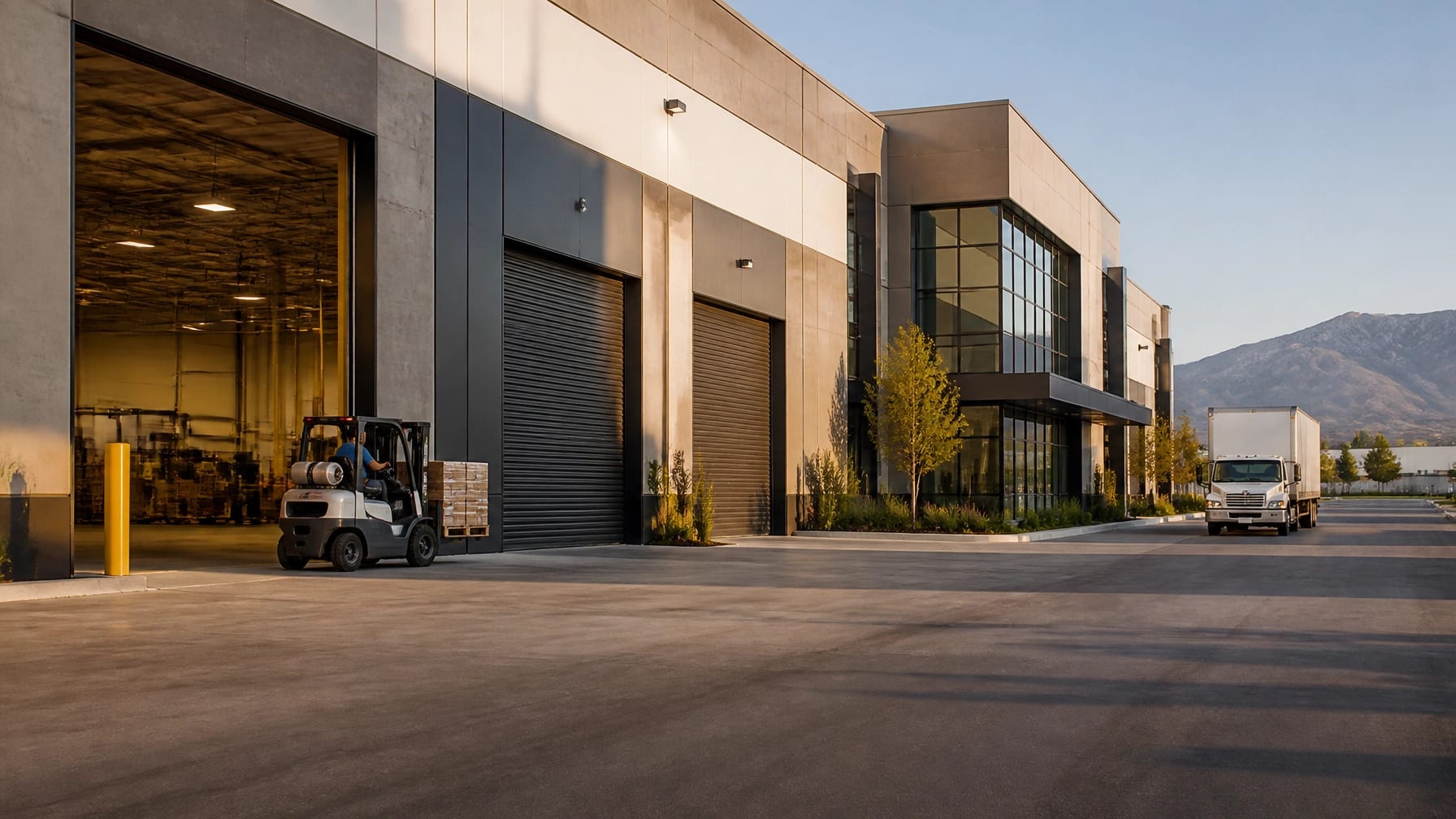
Secret #4: Industrial is strong: but the Inland Empire still rewards patience
Industrial real estate remains one of Southern California's more resilient commercial sectors. The Inland Empire continues to benefit from logistics, distribution, manufacturing, and regional population growth.
However, the market has moved away from the extraordinary conditions seen during the pandemic-era boom.
Research published by Keyz Commercial Real Estate reported Inland Empire industrial vacancy near 7.6% in Q2 2026, while asking rents were approximately 23% below their 2023 peak. At the same time, leasing activity increased substantially and new construction declined.
That combination creates a more balanced environment.
For a business owner, this may create an opportunity to negotiate better terms or evaluate an owner-user purchase. For an investor, it means underwriting should be based on today's rents: not on optimistic assumptions from several years ago.
Envision owning a facility that supports your operations while building long-term equity. That may be compelling, but only if the property's financing, maintenance, taxes, insurance, and future capital needs fit comfortably within your business plan.
Secret #5: Retail is not disappearing: it is becoming more selective
Retail is often discussed as though online shopping has eliminated the need for physical stores. The real picture is more nuanced.
Well-located retail centers can remain highly valuable when they offer convenience, strong visibility, easy access, and services people prefer to experience in person. Grocery-anchored centers, neighborhood shopping centers, medical retail, restaurants, fitness businesses, salons, and other service-oriented tenants can support consistent customer traffic.
Commercial Observer reported that Southern California retail investment sales reached approximately $3.52 billion during the first half of 2026, an increase of nearly 62% from the same period in 2025. The Inland Empire recorded a significant year-over-year increase in investment activity, while Orange County retail vacancy was reported at approximately 3.8%.
These numbers do not mean every retail property is a good investment.
Before buying or leasing, study:
The tenant mix
Co-tenancy and anchor stability
Parking and access
Visibility from major roads
Nearby residential and employment growth
Lease expiration schedules
Signage and use restrictions
Competition from newer centers
The most valuable retail property may not be the one with the most attractive façade. It may be the one that consistently makes it easy for customers to arrive, shop, return, and recommend the business.
Secret #6: Office space must earn its place
Office remains the most challenging major commercial asset class in much of Southern California. Hybrid work, tenant downsizing, and elevated vacancy have changed what businesses expect from a workplace.
That does not mean every office property is a problem.
High-quality, well-located office space with natural light, upgraded interiors, parking, conference areas, wellness features, and flexible layouts can still attract tenants. Medical office, professional services, specialized practices, and owner-users may evaluate space differently from large corporate tenants.
J.P. Morgan's 2026 commercial real estate outlook notes that high-quality office space continues to attract end-user demand, while lower-quality properties may face obsolescence or require repositioning.

If you are considering office space, ask yourself:
Does the layout support how your team actually works?
Is the building easy for clients and employees to reach?
Will the property remain competitive after the lease begins?
Are tenant improvements sufficient?
Could the space serve another use if your needs change?
The right office decision is less about following a trend and more about matching the property to your organization's next chapter.
Secret #7: Financing should enter the conversation before you fall in love with a property
Many buyers begin with a building search and speak with lenders later. That sequence can create avoidable stress.
Your financing strategy may influence:
The price range you can responsibly consider
Your required down payment
Whether an owner-user structure is practical
Your monthly obligations
Your ability to fund improvements
Your flexibility during lease-up or renovation
Commercial lending activity has improved, but lenders remain selective. Alternative lenders now represent a larger share of non-agency lending, and loan terms vary significantly by property type, borrower strength, occupancy, income, and condition.
A property that looks affordable at the purchase price may feel very different after debt service, taxes, insurance, maintenance, reserves, and vacancy are included.
This is where calm preparation creates control. Before touring extensively, organize your financial statements, business plan, credit information, operating history, and intended use. A qualified lender and experienced commercial real estate professional can help you understand the path before you commit.
The final secret: local guidance should be collaborative, not intimidating
You do not need to know every commercial real estate term before asking for help. You need a trusted partner who can explain what matters, identify what requires specialist review, and help you compare options without pressure.
My background combines more than two decades of real estate experience with over 20 years across Silicon Valley technology, sales, marketing, product development, and IT. That combination helps me look at commercial property from multiple angles: the physical asset, the financial structure, the business operation, and the long-term opportunity.
I help buyers, sellers, and business owners evaluate retail, office, industrial, flex, and other commercial spaces across Los Angeles, San Bernardino, Riverside, Orange, and San Diego counties, with a primary focus on the communities surrounding Ontario and the Inland Empire.
You can learn more about my real estate sales services, explore financial advisory support, or contact me directly to discuss your goals.
Imagine looking back several years from now and feeling confident that your property decision supported your business instead of restricting it. That future is built one thoughtful step at a time; with accurate numbers, realistic assumptions, and guidance grounded in your priorities.
Sources and further reading
Commercial Observer: Southern California Retail Investment Jumps 62% in First Half of 2026
Keyz Commercial Real Estate: Southern California Market Pulse; 2026 Strategic Outlook
J.P. Morgan: 2026 Commercial Real Estate Outlook
California Energy Commission: 2025 Building Energy Efficiency Standards
Market conditions, rents, vacancy rates, financing terms, and regulations can change. Research figures may vary by provider, geography, and methodology. This article is for general educational purposes and is not a property valuation, lending commitment, legal opinion, tax recommendation, or investment guarantee.
Let’s Build Your Future Together
Ready to take the next step toward achieving your financial and real estate goals? Reach out today, and let’s create a clear path to success tailored to your needs.